How to Paint a Deck With Exterior Paint: A Step-by-Step Guide
Painting a Deck With Exterior Paint: What Homeowners Need to Know
Painting a deck with exterior paint can turn a tired, gray deck into one of the best-looking spots in your yard. But deck paint is not the same as the paint you use on siding or trim. It has to handle foot traffic, standing water, sun, and snow, all while staying flexible enough not to crack.
This guide covers choosing the right paint, prepping the wood, applying it correctly, and keeping it looking good for years, along with how paint stacks up against stain.
Should You Paint or Stain Your Deck?

This is worth a real answer before you buy a single can.
Stain soaks into the wood fibers and lets the grain show through. Paint sits on top of the wood and forms a solid film that hides the grain completely. That difference drives almost everything else: cost, durability, color options, and how much work a touch-up takes.
Paint generally wins on lifespan. On horizontal surfaces like deck boards and stairs, a quality paint job typically lasts around 3 to 5 years, while railings and other vertical surfaces can last considerably longer since they shed water and take far less wear. Most stains, by comparison, need a refresh every two to three years because they fade with sun and foot traffic. Paint also opens up far more color choices, since you are not limited to wood-tone shades.
Stain has its own advantages. It applies faster, usually needs only one coat, and skips the priming that paint requires. When it wears out, you clean and recoat, with no scraping or stripping. Paint, by contrast, fails harder: when it finally cracks or peels, you are looking at a full scrape-and-sand job before repainting.
Cost reflects this difference. Professional deck staining runs around $850 on average, while professional painting runs closer to $1,000, mostly due to the extra prep and coats involved.
If your deck has rough or previously painted wood, paint is usually the more practical choice, since stripping old paint to switch to stain is expensive. If you are starting with a new deck and want to show off the wood grain, stain is worth considering instead.
What Kind of Exterior Paint Should You Use on a Deck?
Not all exterior paint belongs on a deck. Deck paint is a specialty formula built for horizontal surfaces that take a beating from foot traffic, rain, and UV rays. It needs to flex with the wood as temperatures shift and resist pooling water in a way that wall paint never has to.
Two main types show up most often:
• Acrylic (water-based) paint. The more popular choice today. It resists cracking and fading, cleans up with water, and dries faster than oil-based paint. It also tends to run lower in VOCs, which matters more to homeowners now than it used to.
• Oil-based paint. Creates a strong moisture barrier and holds up well in harsh weather, but takes longer to dry and needs solvents for cleanup.
If your deck has never been painted, plan on priming it first. Most manufacturers recommend a coat of exterior-grade wood primer on bare or previously stained wood, unless the coating you choose is specifically labeled as self-priming. Primer helps the paint grip the surface and blocks tannins or old stains from bleeding through. Skipping it where the manufacturer calls for it is one of the most common reasons deck paint fails early.
Tools You Will Need
A clean prep job and the right tools matter more than the price on the can:
•Pressure washer (or garden hose for light cleaning) and a stiff-bristle deck brush
•Wood filler and sandpaper or a power sander
•Painter's tape and plastic sheeting or drop cloths
•A roller with an extension pole (synthetic nap for acrylic, natural nap for oil-based)
•A 2 to 3-inch angled brush for edges and gaps between boards
•Exterior wood primer and exterior deck paint
For a large deck, a paint sprayer can speed things up, though it uses more paint and needs more careful masking.
How to Paint a Deck: Step-by-Step
1. Clean the Deck Thoroughly

Start with a full cleaning. A pressure washer makes quick work of dirt, mildew, and any loose or flaking paint or stain, but use a wide-fan tip and keep moving so you do not gouge the wood. No pressure washer? A deck cleaner solution and a stiff brush will work, just with more elbow grease.
Let the deck dry completely, which can take one to two days depending on humidity. Painting over damp wood is one of the fastest ways to end up with peeling paint later.
2. Repair and Prep the Surface

Walk the deck and look for loose boards, popped nails, or rotten sections. Fix anything compromised before you paint over it. Fill cracks and gouges with exterior wood filler, then sand rough spots and any repaired areas so everything sits flush. Sweep up all the dust once you finish, since leftover dust under a coat of paint creates a gritty finish.
3. Mask What You Don't Want Painted

Cover siding, windows, shrubs, and hardware with plastic sheeting and painter's tape. Take your time here. A clean mask line saves far more time than it costs, especially if you plan to cut sharp edges with a brush later.
4. Apply Primer

Roll on a coat of exterior wood primer, working it into the grain and gaps between boards with a brush. Primer blocks tannins from bleeding through your topcoat and gives the paint something to grip. Let it dry fully before moving on. If you chose a self-priming deck coating, you can skip this step, but only on surfaces the manufacturer says it covers.
5. Paint the Deck

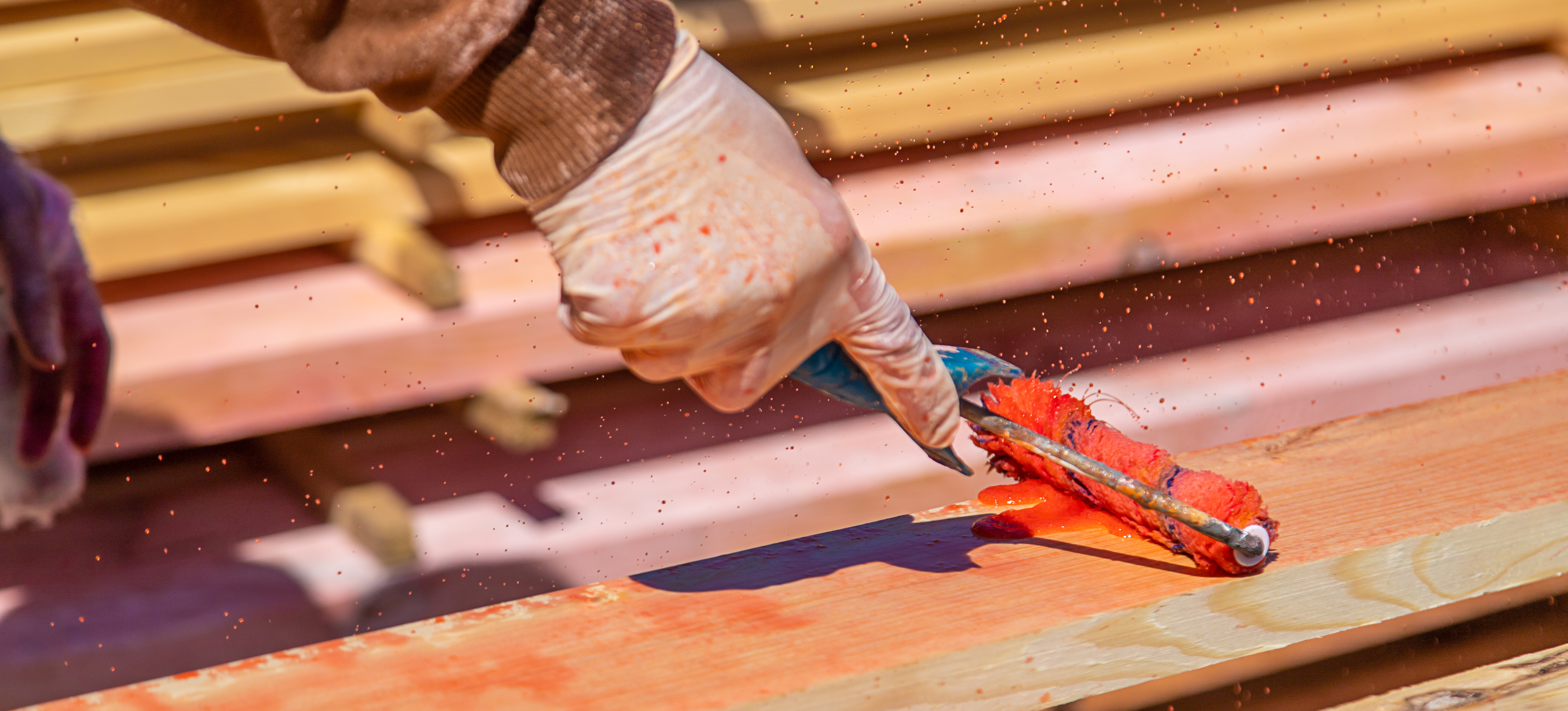
Apply paint in sections, working from the far corner of the deck toward your exit point so you never have to step on wet paint. Use the roller for the broad boards and the angled brush for edges and gaps where a roller cannot reach.
A few habits make a real difference:
•Keep a “wet edge”by working into the still-wet section next to where you just painted. This avoids visible lines and lap marks.
•Apply two coats for the best coverage and longest-lasting finish, letting the first coat dry fully before the second.
•Check the weather. Most deck paints perform best between 50°F and 85°F with low humidity. Painting in direct, hot sun causes the paint to dry too fast and can lead to lap marks.
If spraying instead of rolling, work with the wood grain and keep the sprayer moving steadily to avoid heavy spots or runs. Keep a brush nearby to smooth out any drips while the paint is still wet.
6. Let It Cure Before Use
Give the final coat real time to cure, not just dry to the touch. Most deck paints need 24 to 48 hours before foot traffic, and longer before furniture goes back on. Walking on it too soon can leave footprints or peel the surface in spots.
Caring for a Painted Deck Over Time
A painted deck is not maintenance-free, but the upkeep is manageable if you stay ahead of it.
• Sweep weekly to clear debris that traps moisture against the painted surface.
• Wash seasonally with a mild deck cleaner to prevent mildew and dirt buildup.
• Inspect annually, ideally on a dry day, for chips or cracks, especially after a tough winter.
• Touch up small areas promptly. Catching a chip early means scraping a small spot and dabbing on matching paint. Waiting lets moisture get underneath, and the damage spreads.
Horizontal surfaces like deck boards typically need a full repaint every 3 to 5 years, with high-traffic spots like stairs sometimes needing attention sooner. Railings and other vertical surfaces shed water and see far less wear, so they usually go noticeably longer between repaints.
Why Colorado Is Especially Hard on Deck Coatings
Colorado decks live a tougher life than most, and it shows in how long coatings last here.
Start with the sun. At our elevation, the atmosphere filters out less ultraviolet light, so UV exposure is significantly more intense than at sea level, and with roughly 300 sunny days a year, that radiation works on your deck almost daily. UV breaks down the resins that hold a paint film together, which is why south- and west-facing decks along the Front Range fade and chalk faster than the same products would elsewhere.
Then come the freeze-thaw cycles. Colorado is famous for wild temperature swings, a 60-degree afternoon can drop below freezing overnight, sometimes dozens of times in a single season. Each swing makes the wood underneath expand and contract, stressing the paint film until hairline cracks form. Once moisture from melting snow slips into those cracks and refreezes, it pries the coating loose from the inside.
The practical takeaway: expect the shorter end of any repaint range here, and treat maintenance as non-negotiable. An annual spring inspection, prompt touch-ups, and keeping snow from sitting on the boards for weeks at a time will add real years to a Colorado deck finish.
Color and Style Trends Worth Knowing
If you are still deciding on a color, current exterior trends lean toward warm, natural tones that age well rather than chase a passing look. Warm grays, greiges, deeper charcoals, and muted earth tones are leading choices for painted decks this year, replacing the brighter, glossier finishes that were popular before. These shades also hide dust and pollen better than stark colors, which is a quiet bonus in dry climates. Manufacturers have also leaned further into low-VOC, water-based formulas, which matters if you are painting near living spaces.
Frequently Asked Questions
Do I need to prime before painting a deck, even over old stain?
Yes, for bare or previously stained wood — unless the paint you chose is specifically labeled as self-priming. Clean and sand the surface first so the primer and paint can grip. Primer blocks tannins from bleeding through and helps prevent early peeling.
How long does deck paint last?
On horizontal surfaces like deck boards and stairs, a properly prepped and applied paint job typically lasts around 3 to 5 years before it needs a full repaint. Railings and other vertical surfaces usually last longer, and prompt touch-ups extend both.
Is it better to paint or stain pressure-treated wood?
Many pros lean toward stain for newer pressure-treated wood, since it needs time to dry out before paint will adhere well. If you choose paint, wait until the wood has weathered for a season first.
Sources: Angi, “Paint vs. Stain for Your Deck” (2026); Bob Vila, “What’s the Difference? Painting vs. Staining the Deck” (2026); Deck Expressions, “How to Paint a Deck” (2024); CoreImprove, “Deck Stain Trends 2026” (2026); Home Depot, Deck Paint category data (2026).
